
3 Best Starter Watches for Three Power Routines in 2026

On this page9
- #1. Tissot PRX quartz T1374101104100: start with the bracelet
- #2. Hamilton Murph H70405730: start with an automatic on leather
- #3. Citizen Promaster BN0151-09L: start with a solar diver
- How we picked the best starter watches
- Factors to consider when choosing a first watch
- Before ordering: make the choice specific
- After it arrives: check one thing at a time
- If none of these three meets your brief
- Verdict on the best starter watches
Our top 3 picks
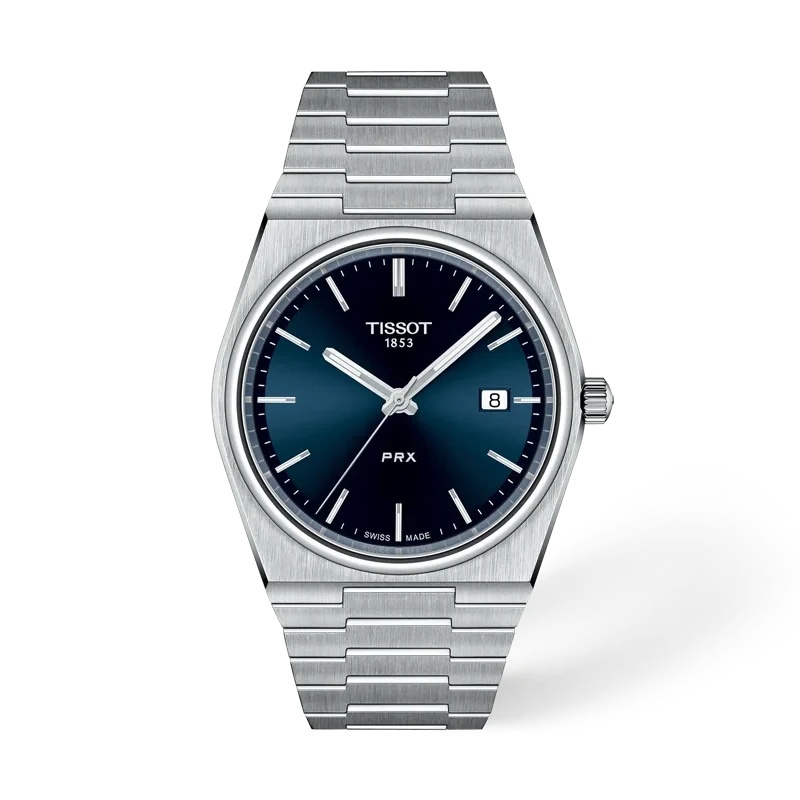 1Quartz bracelet optionTissot PRX Quartz T1374101104100
The quartz PRX suits a buyer who likes the larger case and wants to avoid winding, but the bracelet's full rigid span still needs a fit check.
View at TissotRead our analysis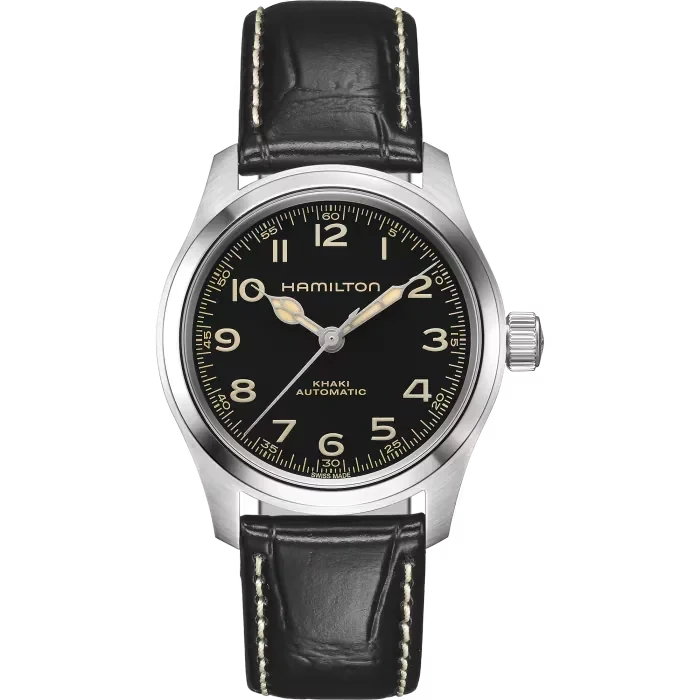 2Compact automaticHamilton Murph H70405730
The smaller Murph suits an automatic-watch buyer who accepts a setting routine and a leather band that needs care around water.
View at HamiltonRead our analysis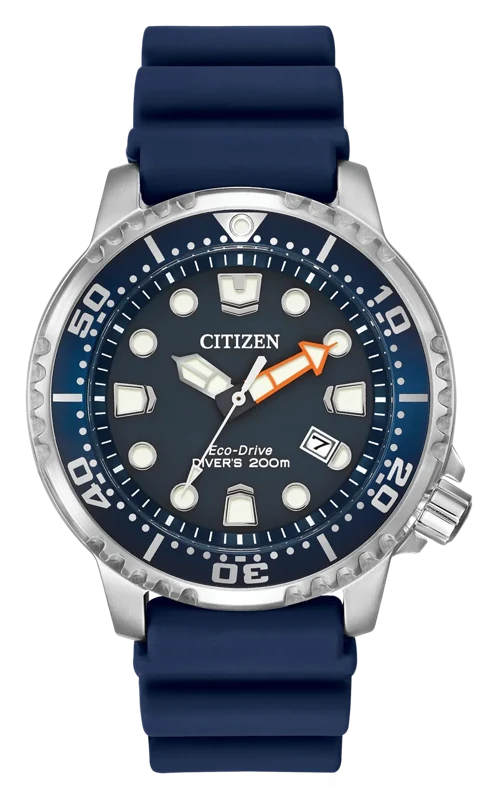 3Light-powered diverCitizen Promaster BN0151-09L
Choose it for a light-powered diver routine, but check that the broad case and polyurethane strap suit you.
View at CitizenRead our analysis
Last updated 31 October 2026
The best starter watches help you choose a routine you want to keep. You do not need a particular movement to qualify as a watch owner. These three references give you distinct starting points: quartz on a steel bracelet, an automatic on leather, and a light-powered diver on a polyurethane strap. Each has a clear reason to choose it and a limit worth checking. Begin with how you plan to wear the watch, then try the complete case and band.
#1. Tissot PRX quartz T1374101104100: start with the bracelet
Tissot PRX Quartz T1374101104100
Our verdict:
Quartz bracelet option
The quartz PRX suits a buyer who likes the larger case and wants to avoid winding, but the bracelet's full rigid span still needs a fit check.
View at TissotKeep in mind: Case width does not establish the bracelet's full reach on your wrist.
The quartz PRX is the starting point if you want a steel bracelet and do not want a winding task. This exact blue-dial model has a butterfly clasp and a date display. Choose it when the full bracelet design is part of the appeal. That is a clearer brief than buying a watch because you feel a first watch ought to be mechanical.
Tissot's US model page lists a 40 mm case width, 10.40 mm thickness and a sapphire crystal. It also gives a case length of 39.5 mm. That last figure is not the full rigid span of the case and bracelet together. The opening links can extend before they bend around your wrist. Try the whole shape with the clasp fastened.
The quartz movement avoids restarting a spring after a long rest. Battery replacement remains a future service task. Check the time and date when you first receive it, and follow the exact instructions for calendar changes. A simpler power routine does not mean that every setting will always be correct. It means winding is not one of the routine tasks.
Bracelet fit deserves attention before links are removed. Read the seller's return and alteration terms, then ask who will size it. Keep any removed links and the supplied parts if you keep the watch. A case that looks right with a loose bracelet can feel different once fastened. Try normal wrist bends and the sleeve you expect to wear.
This is a weaker first choice if you want a soft band from the start. The PRX uses a particular bracelet-led design, so do not assume every conventional strap will fit. A quick-release attachment is not universal accessory compatibility. Check Tissot's exact guidance before buying an alternative. The watch should meet your main brief as supplied.
The PRX family includes other case sizes and automatic movements. Keep T1374101104100 with this recommendation rather than searching by family name alone. If an offer changes the case or power system, compare it as a different watch. Those differences can alter both fitting and ownership tasks, even when the dial has a similar style.
#2. Hamilton Murph H70405730: start with an automatic on leather
Our verdict:
Compact automatic
The smaller Murph suits an automatic-watch buyer who accepts a setting routine and a leather band that needs care around water.
View at HamiltonKeep in mind: The movement can stop after a long rest; the leather strap needs its own care.
The 38 mm Murph is the choice if a spring-powered movement is something you want to own and use. It comes on black leather with a pin buckle. Its automatic movement can stop after a long rest and need starting and setting. Accept that as part of the choice rather than assuming that wearing it briefly always stores a full reserve.
Hamilton's exact US page lists a 38 mm case, 11.1 mm thickness and sapphire crystal. It names the H-10 movement and states an 80-hour reserve. Those are maker specifications. This guide did not time the movement, measure its reserve or test its accuracy. A stated reserve is not a result for the watch you receive in an unknown state of wind.
The smaller quoted width can make this a useful one to try if a broader watch feels wrong. It is still not a promise of fit. Check where the case ends and where the buckle sits once the leather is fastened. Try bending your wrist without tightening the band merely to hold the case still. The complete arrangement matters more than the width alone.
Hamilton lists 10-bar water resistance for the case. That figure does not describe the leather strap's care needs or turn the Murph into the diver in this group. Follow the exact manual and band guidance. If your first-watch plan centers on water use, make that a separate requirement rather than relying on a field-style appearance.
Choose the Murph because the automatic routine and leather design appeal to you. If restarting a watch sounds like a chore you will resent, reconsider the movement before buying. You do not need to grow into an automatic to make a valid choice. The quartz and solar alternatives address different habits without making the owner less interested in watches.
Keep H70405730 separate from larger Murph references and other Khaki Field models. A broad family label does not establish the case or movement. Match the full code to the supplied band, then check the dial. Our automatic-watch guide explains the movement terms if they are new to you, so you can judge this exact model without learning every watch category first.
#3. Citizen Promaster BN0151-09L: start with a solar diver
Our verdict:
Light-powered diver
Choose it for a light-powered diver routine, but check that the broad case and polyurethane strap suit you.
View at CitizenKeep in mind: The 44 mm case needs a direct fit check; it comes on a polyurethane strap.
The blue BN0151-09L is the choice if you want a light-powered diver and prefer a strap to a bracelet. Citizen's Eco-Drive system stores energy in a rechargeable cell. It is solar quartz, not a mechanical movement and not a watch with no battery. Light exposure is part of keeping it powered. Charging advice belongs to its exact manual.
Citizen's US model page lists a 44 mm steel case with a polyurethane strap. It names the E168 movement and describes an ISO-certified 200M diver. The mineral crystal is another concrete difference from the sapphire choices above. Those facts support its diver role without providing a wear or water-test result from this guide.
The broad case is the main fitting check. Try the actual watch rather than treating its strap as proof that it will suit a small wrist. Check the case ends and the useful band holes, including the buckle position. A soft band cannot shorten the steel case. If it feels too broad, the power system alone is not a reason to overlook that fit.
The E168 manual gives the charging and setting procedure. Follow it without using heat as a shortcut. A drawer does not provide the light the system needs. Do not treat a maker's maximum reserve figure as the state of a watch that has been stored in unknown conditions. Check its operation before relying on it.
The screw-type crown needs to be secured as directed after setting. The manual also sets conditions for calendar changes and water use. A certified diver still has to be in suitable condition and used within its instructions. This recommendation is a model comparison, not a replacement for training or a personal dive plan.
Choose the Citizen for this light-powered diver brief. It is less suited to someone who wants a leather dress style or the feel of a spring-powered movement. Promaster is a large collection, so keep BN0151-09L with your choice. Another Promaster can change both the case and the power system. The familiar collection name does not prove a match.
How we picked the best starter watches
The selection gives a first buyer three different power routines and three supplied band types. Current maker pages and matched catalog identities establish the exact references. The PRX leads for a steel-bracelet quartz choice, the Murph offers an automatic on leather, and the Citizen addresses a solar-diver brief. These roles explain the order. No watch was worn or put through a timing or water test for this guide.
There is no invented score for prestige or a claim that one of these is the first watch everyone should buy. A reader who wants an automatic can reasonably start with the Murph. A reader whose main use is documented diver wear can start with the Citizen. The recommendation remains tied to the use and limitations named for that exact reference.
Factors to consider when choosing a first watch
Write a brief about your day
Begin with where you will wear it. A watch worn with a shirt at a desk faces a different personal fitting question from one chosen mainly for a diver role. Write down the sleeve and the band material you want. Then state whether a date display is useful to you. Those few facts make it easier to compare watches without collecting features you did not ask for.
Think about how often the watch will be off your wrist. If you rotate with another watch or leave it in a drawer for long gaps, that pattern affects the power routine. Quartz avoids winding, an automatic can need restarting, and solar needs appropriate light exposure. None is a care-free system. Choose the set of tasks you intend to do.
Keep workplace or activity rules in the brief. A watch may not be permitted for part of your job or sport. The product's appearance does not settle that rule. If you will remove it during those tasks, the choice may be for the commute and the rest of the day. That narrower use can still justify a watch you enjoy.
Try not to write a brief for an imagined future collection. Your first watch does not have to fill every category or establish a buying order for years ahead. Choose the watch you want to wear now, with the limits clear. A specific use is easier to assess than a demand for one watch to suit every possible occasion.
Choose the routine before judging the movement label
The PRX uses a conventional battery-powered quartz routine. The Murph stores energy in a spring. The Citizen uses light to charge a cell. Those differences tell you what to plan for; they do not provide measured results for accuracy or service life here. The quartz and automatic comparison gives the wider explanation in one place.
If you like the process of starting and setting an automatic, make that a positive part of the brief. If you would rather avoid it, choose that preference with equal confidence. A first purchase should not depend on an unwanted task becoming enjoyable later. The movement you will use well is more relevant than a label chosen for someone else's approval.
Solar needs its own thought about storage. Ask where the watch will sit between wears and read the maker's light guidance. Keeping a solar watch in darkness is not the same routine as storing a conventional quartz watch with a charged battery. Avoid guessing the state of charge from how long it was on your wrist. Use the manual's checks.
All three can need service. A rechargeable cell is not a lifetime exemption from work on the Citizen. The PRX can need battery replacement, and the Murph can need mechanical service. This guide gives no fixed service interval or cost forecast. Ask the maker or service provider about the exact watch when planning that work.
Use case measurements as a starting point
Case width is one useful fact, but it does not describe the full watch. Thickness affects the side profile. Lug reach and a bracelet's rigid opening section affect how the case sits across the wrist. The band setting affects where it rests. Keep those questions separate rather than looking for one number that proves comfort.
The Murph's 38 mm width, the PRX's 40 mm width and the Citizen's 44 mm width make a clear first comparison. They do not create a fit ranking for every wrist. Try the complete fastened watch where possible. Check the side view and move your hand through its normal range. A watch balanced loosely on top of the wrist is not the same fitting.
Do not treat a seller's photograph as a scale drawing. Wrist size, camera distance and angle can alter how large a watch appears. Use the exact maker dimensions to form questions, then answer them with a fitting or a careful return plan. The PRX fit worksheet helps separate case data from unconfirmed bracelet span.
For a gift, a recipient's style and fit preferences deserve attention before alterations. Avoid removing bracelet links just to make the package look finished if you do not know the required size. Read the seller's gift and return conditions. A chance to try the whole watch can be more useful than an assumption based on a gender label or a wrist photo.
Assess the supplied band first
The PRX is a steel-bracelet choice, the Murph comes on leather, and this Citizen has polyurethane. Each band is part of why that exact watch is on the list. Start by deciding whether you want that arrangement. If the answer depends on changing it immediately, verify the replacement's compatibility before buying the watch or accessory.
A strap cannot solve every case-fit issue. It can change how the watch sits, but it cannot shorten the metal case or its lugs. A bracelet also has a clasp that needs to sit usefully on your wrist. Try the band at an actual usable setting. Holding it loosely while judging only the dial misses part of the decision.
Read care instructions for the band as well as the case. The Murph's leather needs separate consideration around water. The Citizen's strap does not make every activity acceptable merely because it is polyurethane. Case ratings, materials and the condition of the watch answer different questions. Follow the exact guidance for the complete model.
If you keep a watch after sizing, retain the original parts and removed links. They can matter if your fit changes or the watch is later sized for someone else. That is a practical reason to keep them together, not a claim about resale returns. Do not choose a first watch on the assumption that its later sale will recover a particular amount.
Check the dial for the task you need
Look at the hands and hour marks from a normal reading distance. The dial you prefer in a close-up may feel different on the wrist. If the date matters, check that window as well as the time display. This guide provides no measured legibility result. A personal check in ordinary light helps assess whether the layout works for you.
Nighttime reading is a separate question. A luminous-material name does not prove how long you will read the time after the lights go out. If that use is central, ask for evidence about the exact model and keep the limits of marketing photographs in view.
Do not confuse a date display with automatic correction for every month. Read the exact movement instructions and plan for the settings the watch requires. A feature can be useful while still adding a task. Decide whether you want that task rather than treating a longer feature list as the aim of a first purchase.
Before ordering: make the choice specific
Match the reference to the offer
Keep the complete maker code beside the watch you chose. T1374101104100 identifies this quartz PRX. H70405730 identifies the smaller Murph on leather. BN0151-09L identifies the blue solar Citizen on polyurethane.
A shared collection name cannot establish those exact details. If the title and code disagree, ask which item will arrive. Check that the photo shows the stated version too. Resolve a mismatch before assuming the item will be the watch you had in mind.
Check the supplied band and included parts as well. A maker's custom configuration does not prove that every retailer offers the same bundle. Ask about sizing if the bracelet will arrive adjusted. For a strap model, verify the band in the offer rather than assuming it matches another photograph found online. Resolve the model identity before choosing accessories.
Keep availability questions separate from model facts. A page for a family can remain online even when one reference is not available. The specifications on that page also do not prove that an offer has the same version. This guide ties each recommendation to the exact reference so those questions remain clear.
Read the return and warranty terms
Find out when the return period begins and what the seller allows during a fitting. Ask before removing protective material, changing a strap or having links removed if those actions affect the terms. The relevant policy is the one for the seller and offer you use. A broad brand reputation does not establish that policy for every transaction.
Ask who handles a fault or service request. A retailer's return process and a maker's warranty are different routes. Read the exact terms rather than assuming a familiar brand name proves every seller has the same warranty status. Keep the receipt, model details and supplied documents together if you keep the watch.
No fixed future maintenance cost is promised here. Service needs depend on the watch and its condition, and providers can have different terms. If the service plan matters to your decision, ask for current information before ordering. Keep that uncertainty in the decision rather than relying on an invented lifetime ownership figure.
Wait before buying extra equipment
A first watch does not require a pile of tools to be a complete purchase. Learn its actual setting steps and confirm the fit first. An automatic winder is not part of this shortlist's requirements. If the Murph stops during a rest, follow its manual to restart it. Decide later whether any accessory answers a task you actually have.
The same applies to replacement straps and storage cases. Confirm compatibility and the seller's terms before spending on changes. A storage pouch does not provide charging light for the Citizen. A new band does not alter the PRX's rigid case span. Tie each proposed accessory to a specific need instead of buying a generic starter kit.
If you need bracelet sizing, ask an appropriate provider about the exact clasp and links. Avoid learning a procedure by forcing a part that does not move as expected. Keep the supplied pieces and ask for help when needed. The aim is to wear the watch you chose, not to turn the first fitting into an unplanned repair task.
After it arrives: check one thing at a time
Match the model and band to the order before making changes. Read the instructions, then set the watch using the stated procedure. Check the complete fastened fit under the seller's terms. These are separate steps, so a problem with one does not have to become a vague judgment about the whole watch. Note the exact issue if you need to ask a question.
Focus on the PRX's bracelet reach and clasp position before alteration. Learn the Murph's starting and setting routine and assess its leather fit. Follow the Citizen's charging guidance and crown instructions before any intended water use. Each watch has a different first-use task. There is no reason to apply the same checklist of mechanical controls to all three.
Do not turn an early observation into an unsupported long-term claim. A watch running when it arrives does not establish its service life. A short period on the wrist does not measure a reserve or prove comfort for every day. Give the choice the careful fitting it needs, while keeping any seller deadlines in view. Ask the maker or seller specific questions that can be answered.
If none of these three meets your brief
Use the comparison to narrow the search even if you do not choose a pick. You may like quartz power but find the PRX's bracelet too broad. That gives you a useful next step: look for a different quartz case and band. It does not mean you need to switch to an automatic just because the Murph is smaller. Keep the part of the brief that worked and change the part that did not.
The same applies to the Citizen. If you want solar power but its case does not fit, do not treat that size as a rule for all solar watches. The power source does not fix the case dimensions. Search for the fit and use you need with that routine in mind. Check each new exact reference rather than carrying the BN0151's specifications across to it.
A first buyer may also want a plain digital display or a much smaller analog watch. This three-model selection does not cover every design. Its aim is to make the power and fit decisions clear. A watch outside this list can be the right choice if it meets your brief with sound evidence. There is no need to buy one of these first as a step toward a different watch.
Keep the reasons for rejecting a watch concrete. A case that extends beyond where you want it is a fit issue. A leather band you do not want to care for is a material preference. A winding task you do not want is a routine choice. Those are useful reasons to change direction, and none requires calling the whole model poor.
If you cannot try a watch and the exact size data are unclear, ask for that missing fact before ordering. Do not fill a gap with a dimension from a similar reference. A clear answer can either settle the choice or rule it out. That is progress toward a suitable first watch even when the result is to wait or choose another model.
Verdict on the best starter watches
The best starter watches in this group offer three clear routines. Choose the quartz PRX if a steel bracelet and no winding task meet your brief. The 38 mm Murph suits an automatic-watch buyer who wants leather and accepts restarting after a rest. The Citizen BN0151-09L addresses the light-powered diver brief if its broad case fits.
Choose the exact watch you want to wear as supplied, then check its complete fit and instructions. A first watch does not need to prove a level of interest or start a collection. It needs to suit your day, with an ownership routine you intend to follow.
Watch market statistics · Compare exact watch references
Plan a weekly mechanical-watch rotation before choosing how much power reserve you need.
Our picks in this topic

3 picks
3 Affordable Microbrand Watches for Field Style in 2026
Compare Vaer S5, titanium Boderry Voyager and the 36 mm Bertucci A-1S Aero 10607 by confirmed case, band and ownership facts, with missing details kept clear.