
3 Best Watches Under 50 for Different Daily Routines in 2026

On this page10
- #1. Casio F-91W-1: a basic digital starting point
- #2. Casio A158WA-1: digital basics with a steel bracelet
- #3. Casio CA-53W-1: choose it for the calculator
- How we picked the best watches under 50
- Factors to consider when choosing a basic watch
- Battery power and care are part of the choice
- Water resistance is a model-specific limit
- Match a basic watch to a normal day
- Check the reference and seller before ordering
- Verdict on the best watches under 50
Our top 3 picks
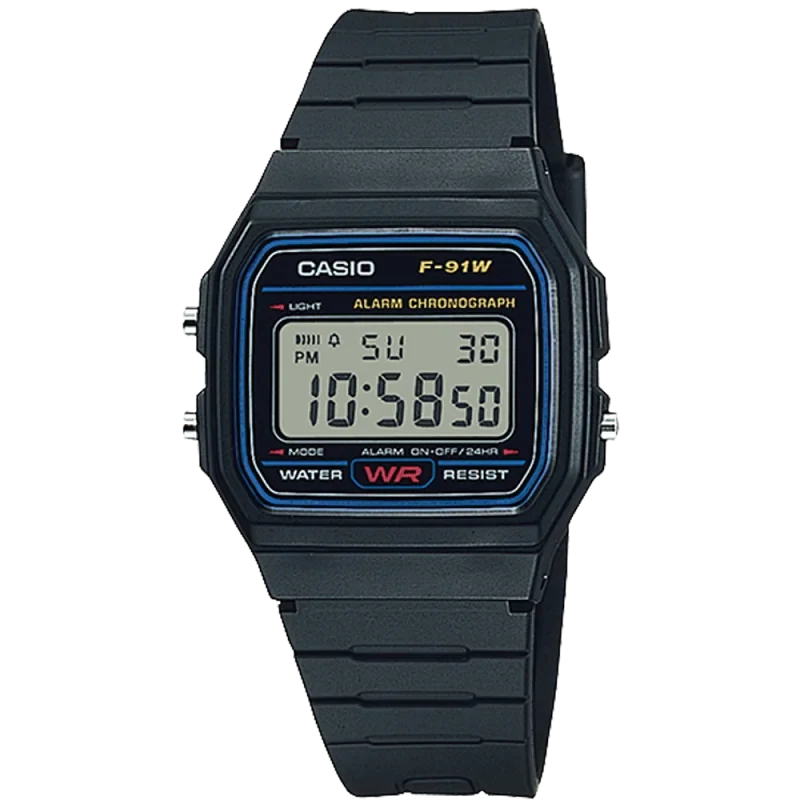 1Simple digital choiceCasio F-91W-1
Start here for a small digital watch with an alarm and stopwatch, but check the display and button layout in person if possible.
View at CasioRead our analysis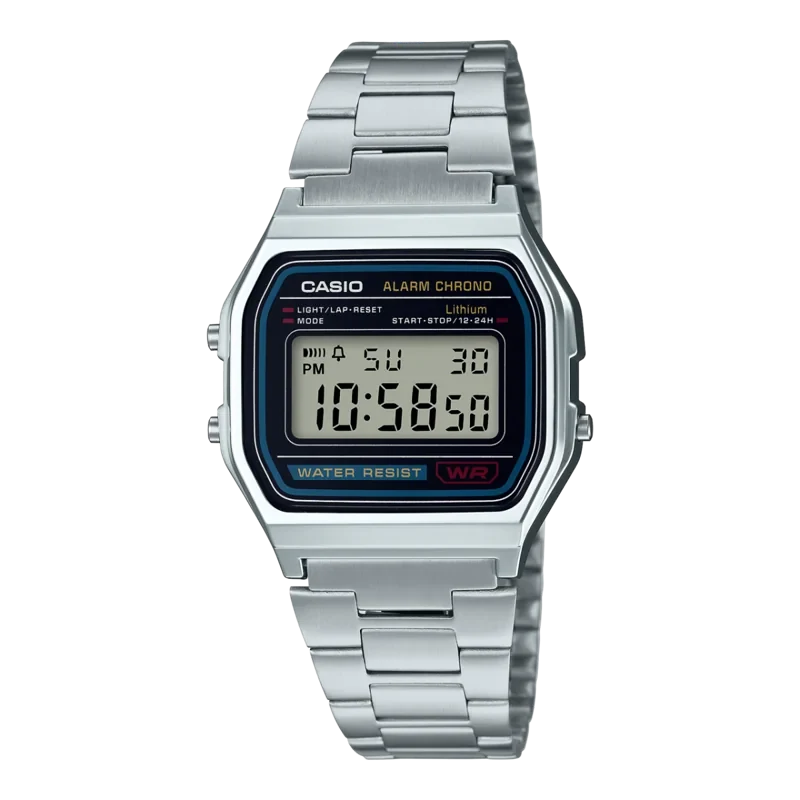 2Digital steel braceletCasio A158WA
Choose it for the bracelet and basic digital functions; the chrome-plated case is resin.
View at CasioRead our analysis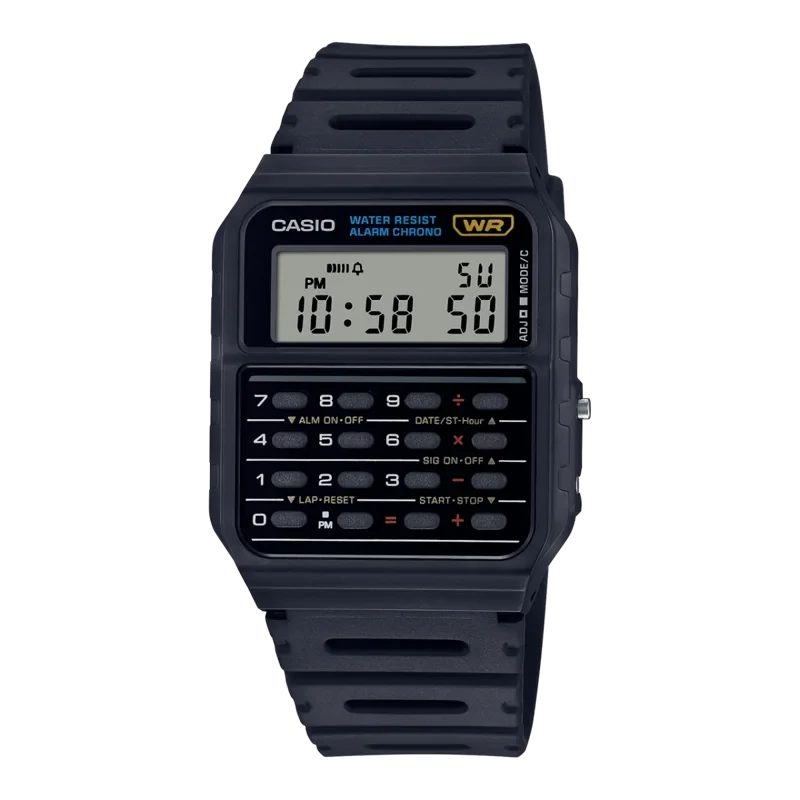 3Calculator choiceCasio CA-53W-1CR
Choose it for the calculator and dual-time functions, but make sure the small keypad is a feature you want to use.
View at CasioRead our analysis
Last updated 31 October 2026
The best watches under 50 do not all need to serve the same task. A basic digital alarm can be enough for one person. A steel bracelet or a wrist calculator can matter more to someone else. These three Casio model families give you those different starting points. Choose the functions you will use, then check the band and display.
#1. Casio F-91W-1: a basic digital starting point
Our verdict:
Simple digital choice
Start here for a small digital watch with an alarm and stopwatch, but check the display and button layout in person if possible.
View at CasioKeep in mind: Its basic water-resistant description does not make it a swim or dive recommendation.
Choose the F-91W-1 if you want the time in digits, plus an alarm and a stopwatch. Those functions give it a clear role. You can use a watch for a short timed task without wanting the layout of a calculator watch. The choice depends on whether its display and controls suit you.
Casio's model information lists a resin case and band, an LED light, a daily alarm and a stopwatch. Its rectangular case is listed at 38.2 mm long, 35.2 mm wide and 8.5 mm thick. The width is not the diameter of a round dial, so keep the shape in mind when you compare those figures with another watch.
The light is a documented feature. That does not give this page a measured brightness result or prove that you will read every part of the screen in a dark room. If night use is a main reason for buying, try the display and light in suitable conditions where possible. A product photo taken with studio lighting cannot answer that question for you.
The main caution is water use. Casio describes this model as water resistant. Do not turn that phrase into a diving or swimming recommendation. Read the exact manual for the watch you receive. A sporty digital shape and a resin band do not establish permission for a particular activity.
It is also worth checking how you feel about buttons and modes. If you prefer a steel bracelet, compare the A158WA. If you only want hands on a dial, this all-digital set does not meet that brief. The F-91W earns its place through its supported functions, rather than an assumption that every buyer needs them.
#2. Casio A158WA-1: digital basics with a steel bracelet
Our verdict:
Digital steel bracelet
Choose it for the bracelet and basic digital functions; the chrome-plated case is resin.
View at CasioKeep in mind: The steel bracelet does not make the case solid steel; general water wording is not swimming permission.
Choose the A158WA if you want a digital watch on a steel bracelet. It takes a different approach from the F-91W's resin band and the CA-53W's calculator controls. The bracelet is the main reason to choose it here. It does not turn the case into solid steel.
Casio's A158WA-1 specification describes a chrome-plated resin case and a stainless steel band with an adjustable clasp. The case is rectangular: 36.8 mm long, 33.2 mm wide and 8.2 mm thick. Resin glass covers the display. The width is not the diameter of a round watch.
The documented daily alarm and stopwatch cover common digital tasks. An LED light helps illuminate the display. This guide has no measured brightness result. Try the light and the viewing angle if reading the time in a dark room is a reason for buying. A product photograph cannot show how the display will look to your eyes.
Check the clasp before choosing it as a gift. The band needs to close at a useful position without pinching. A watch can be narrow enough at the case yet have a bracelet that does not sit where you want it. Ask the seller how adjustment works and keep the instructions with the watch.
The steel band changes the look and the feel against your wrist. Neither proves that it will be more comfortable than resin. Try it with your usual sleeve and check the edges where your wrist bends. If a soft band is the feature you want, the F-91W is the more direct starting point in this set.
Casio uses general water-resistant wording for this reference. Do not read that as permission for swimming or diving. Follow the exact model instructions and keep condition in view. The silver-colored finish does not give the watch the same water-use limits as a steel sports watch you have seen elsewhere.
Choose the A158WA for the bracelet and straightforward digital functions. Choose the CA-53W if the calculator is the feature you actually want. If you only want hands on a plain analog dial, none of these three picks answers that preference. Choose the display you want to use each day, rather than buying a function you do not need.
#3. Casio CA-53W-1: choose it for the calculator
Our verdict:
Calculator choice
Choose it for the calculator and dual-time functions, but make sure the small keypad is a feature you want to use.
View at CasioKeep in mind: The keypad adds controls and visual detail; it is a weaker fit for a plain time-only brief.
The CA-53W-1 is the specialist choice in this small group. Its documented functions include an eight-digit calculator, dual time, a stopwatch and a daily alarm. Choose it because one or more of those tasks matter to you. The keypad changes the face of the watch, so it is more than a small variation on the F-91W.
Casio's CA-53W information gives the function set. The calculator handles basic arithmetic on a wrist-sized keypad. That does not establish how easy you will find the buttons, especially if you plan to use them often. Try a short calculation where possible and decide whether the controls suit the task.
Dual time is useful to consider if you want a second displayed time for a regular contact or routine. It is not the same thing as a GPS watch that knows where you are. Check the manual's setting steps and make sure you are comfortable changing the time yourself. A feature name alone does not explain its controls.
The trade-off is a busier face and more controls to learn. If you like a plain dial, the keypad may be detail you do not want on your wrist. If the calculator is the main appeal, that same detail is the reason to choose this model. Neither preference needs to be turned into a universal verdict.
Casio describes water resistance for this model. This page does not turn that into a depth limit or a recommendation for swimming. Keep the control instructions and water-use guidance together. The presence of extra buttons makes the exact manual more useful, not less relevant.
How we picked the best watches under 50
The selection starts with a useful daily job, then checks the exact model against its published information. The F-91W-1 is the basic digital choice. The A158WA adds a steel bracelet to a resin case. The CA-53W-1 adds a calculator and dual time. They are separate model families, rather than three colors of one watch.
The recommendations use catalog facts and Casio's model information. We did not time a watch or test it in water. The order is a starting route for a general buyer, with the simpler digital choice first. It is not a measured quality ranking. A different display preference can move another pick to the top of your own list.
Factors to consider when choosing a basic watch
Pick the display you want to read each day
Start with how you read the digits. Check their size at your normal reading distance, then look at the labels around them. A display that looks attractive in a large web image can be harder to use at arm's length. Think about where and how you will glance at it during the day.
Check the amount of detail around the time. The calculator model has a clear purpose, but its keypad occupies space on the face. The A158WA combines a plain digital layout with a steel bracelet. The F-91W adds mode information around the digital time. Choose the layout that supports your task rather than the one with the longest feature list.
If you wear glasses for close work, try the watch as you would normally use it. A recommendation cannot settle that personal check. Avoid treating a case-width number as a measure of the size of the actual time display. The bezel and controls use some of the case space around it.
Separate a useful function from a decorative feature
Write down the functions you expect to use in a normal week. An alarm, a stopwatch and a calculator are different tools. Owning all of them on one watch may appeal to you, but there is no need to learn controls for a task you never plan to do.
For an alarm, check how you set it and switch it off. For a stopwatch, try a short timed task and clear the result. For the calculator, check the keys you use most. Read the relevant manual before deciding that a familiar function name means a familiar control layout.
Do not assume that a basic stopwatch is a countdown timer. Those are separate functions. A stopwatch counts elapsed time after you start it. A countdown begins from a duration you set. If you need the latter, confirm it in the exact model's documentation rather than inferring it from the word timer in a retailer category.
Check the whole case, not just one number
A rectangular watch and a round watch use space differently. Length, width and thickness all help describe the case. The band attachments can extend the watch's reach further. A single figure in a listing does not tell you whether the complete watch will sit within the flat part of your wrist.
Look at the case from the side while the strap is fastened. Check whether the watch rocks, presses at the crown or blocks your wrist bend. Then try it under the sleeve you wear most. These are personal fit checks, rather than proof of a maker defect or a quality ranking between the picks.
Do not choose a fit from a gender label. A watch's size, strap adjustment and shape matter more than which collection a retailer puts it in. The same reference can suit people with different style preferences. What matters is whether you can fasten it and use it as intended.
Inspect the supplied band and its adjustment
These choices use resin bands, but the phrase does not establish the same fit for all three watches. Check the buckle and the spaces between adjustment holes. See how much spare band extends beyond it. A strap that fastens is not automatically set at the position you find most comfortable.
If you are between settings, do not assume you can solve that with any replacement band. Confirm the attachment and compatibility first. A band described as fitting another model may not fit this one. Ask for model-specific information before buying an accessory to correct a fit problem.
For a gift, keep the return terms and packaging in mind before changing the band. A fit check is easier when the recipient can make it themselves. Confirm the seller's conditions for trying or returning the watch, and avoid making irreversible changes until you know it is a keeper.
Battery power and care are part of the choice
All three picks use battery power rather than a mechanical winding routine. That can fit someone who wants a watch to keep running while it rests between uses. It still leaves battery service as a future task. A stated battery-life figure is an estimate under the maker's conditions, not a promise about the remaining life of the watch you receive.
Check the correct battery and service route in the exact instructions. If a seal is disturbed during service, follow the maker's guidance about maintaining water resistance. Do not assume that opening the back and replacing a cell restores the watch to its original condition without further checks.
Routine care also includes keeping the band and case clean in the way the manual permits. Avoid turning a general cleaning tip into permission to soak the watch or use a solvent. Material names alone do not describe the whole case or its seals. The maker's instructions are the better starting point.
If you are comparing battery power with a spring-powered watch, read what an automatic watch is. That guide explains the mechanism and the setting routine. It can help you decide whether winding is part of the appeal or an extra task you would rather avoid.
Water resistance is a model-specific limit
The words water resistant do not give every watch the same permissions. They also do not establish a personal safe depth. Read the marking and instructions for the exact reference, then account for the condition of the watch. A cracked case, damaged crown or worn seal changes the question.
Do not test a watch in water just to see whether it works. If you need a watch for swimming or diving, choose from models with documented guidance for that activity. Our dive-watch explanation separates a water-resistance number from the wider design and instructions of a diver.
Button use is another reason to read the manual. Permission to wear a watch in some water conditions does not automatically permit operating its controls while submerged. Keep those two questions separate. None of the picks on this page is recommended here as a diving instrument.
Match a basic watch to a normal day
For desk work, begin with the time display rather than the extra tools. Ask whether you want to read hands or digits at a glance. Check the dial under the room's lighting and with your wrist resting in a normal position. The F-91W keeps the resin-band format, while the A158WA offers a steel bracelet without the calculator keypad. Neither choice depends on a claim that one display is easier for everyone.
For a regular reminder, the two digital choices have a documented daily alarm. Check how you would use it in the places you spend time. If a class, workplace or event has rules about watches or audible alerts, ask the organizer about the exact reference before relying on it. A calculator function can matter to those rules as well. This guide does not certify any model for an exam or a workplace requirement.
For contact with someone in another time zone, consider whether the CA-53W's dual-time function serves your routine. Learn the setting steps before you need them. When local clock rules change, check both displayed times rather than assuming the watch knows the new difference. If you would rather avoid a second time display, choose for the main dial and keep that task elsewhere. A function is useful when it matches a real habit, not just because it appears on a comparison list.
Check the reference and seller before ordering
Match the full model code and supplied band to the offer, rather than trusting a broad product title. Families can include different sizes as well as different colors. Some also change the controls. A photograph from one variant does not establish the contents of another. If the listing is unclear, ask for the exact reference before you choose it.
Read who handles returns and who handles warranty work. A maker's general warranty statement does not prove that every seller has the same status or that every sale follows the same route. Keep the order details and the supplied documents together. That makes later questions about the exact watch easier to resolve.
When the watch arrives, compare the reference and included items before removing tags or changing the band. Check the display, the setting steps and the fit within the seller's permitted return conditions. This is an acceptance check for your purchase. It does not replace the maker's service advice or establish long-term performance.
Verdict on the best watches under 50
The best watches under 50 in this selection serve different needs. Choose the F-91W-1 for the basic digital route, the A158WA for its steel bracelet, or the CA-53W-1 for its calculator and dual time. Those are the useful differences in this group. The right choice is the one whose display and controls match your normal day.
Check fit, exact reference and seller terms before you choose. Treat water use and care as model-specific questions. A longer feature list does not settle them, and a simple watch does not remove the need to read its instructions.