
3 Best Field Watches Under 500 by Case and Routine in 2026
On this page8
- #1. Hamilton Khaki Field Quartz H69401930: thinner and smaller
- #2. Vaer S5 Calendar Field S5-FW: quartz with a date
- #3. Boderry Voyager white bracelet: titanium and an automatic
- How we picked the best field watches under 500
- Factors to consider when choosing a field watch
- What this shortlist does not measure
- Make the final model check
- Verdict on the best field watches under 500
Our top 3 picks
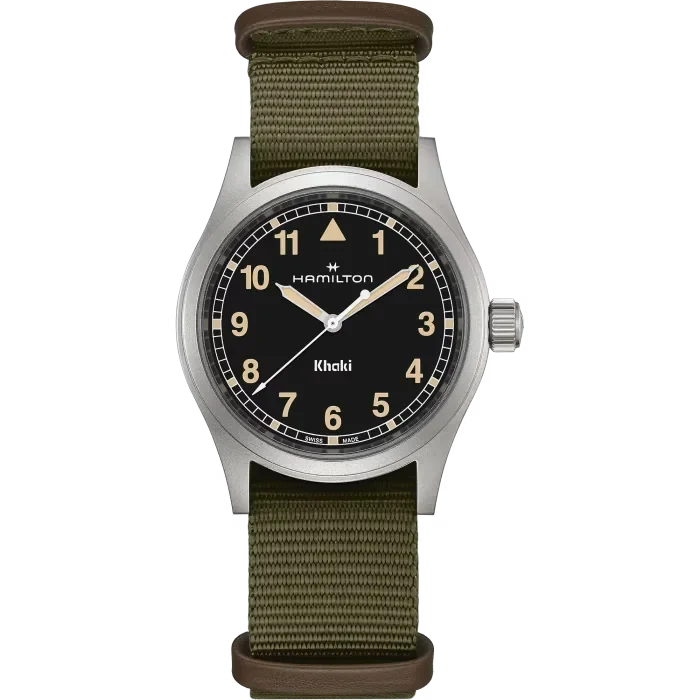 1Slim quartz field styleHamilton Khaki Quartz H69401930
Choose the thin quartz case if you want a battery-powered field-style watch, but choose another movement if winding is part of the appeal.
View at HamiltonRead our analysis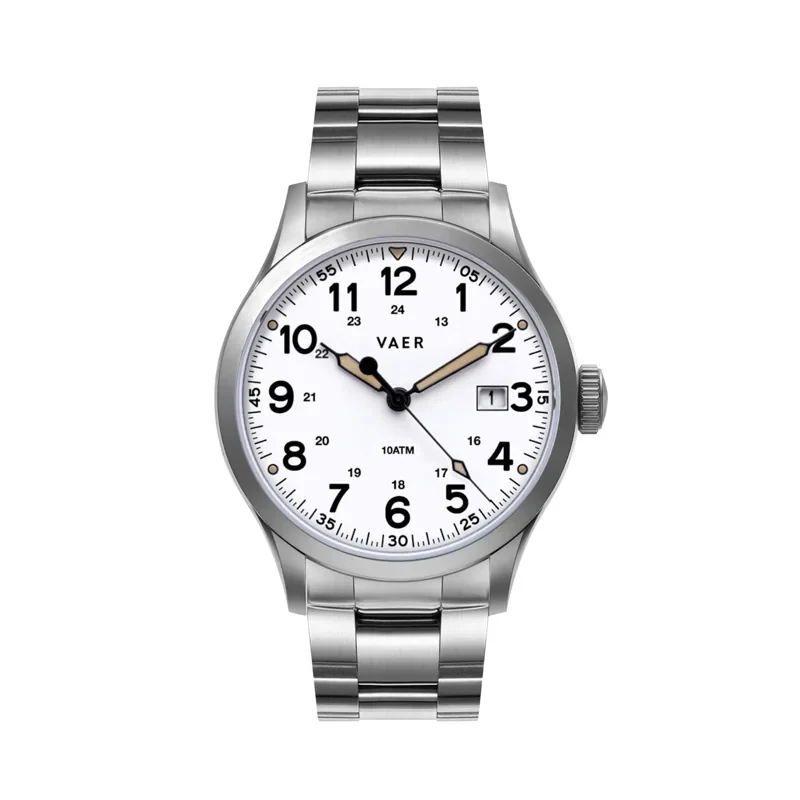 2Quartz field optionVaer S5 Calendar Field S5-FW
Choose the S5 Calendar Field for its quartz routine and date display, but check the 40 mm case and the exact supplied strap pair before ordering.
View at VaerRead our analysis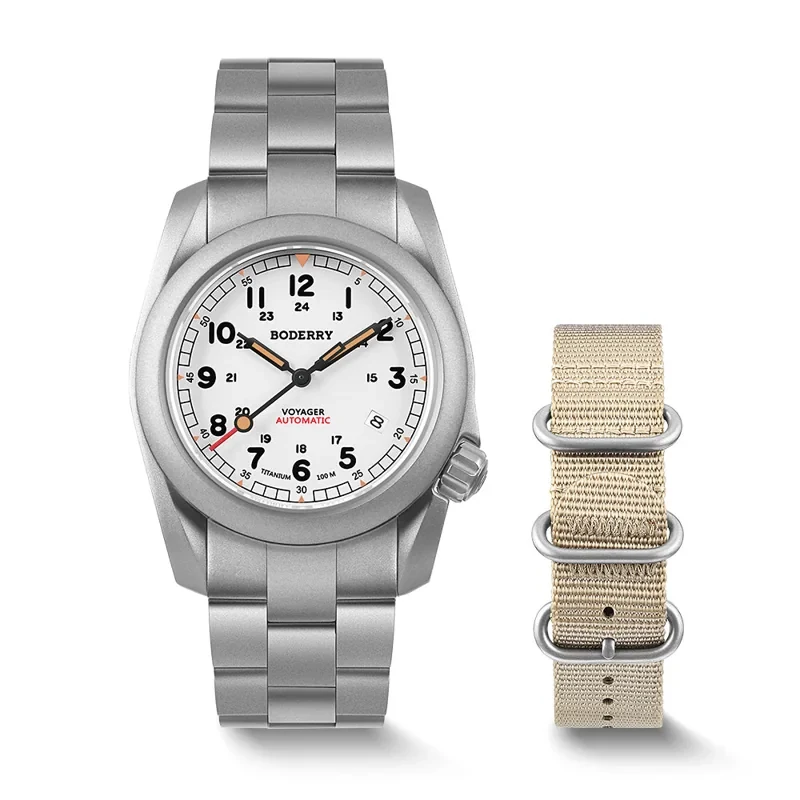 3Titanium automaticBoderry Voyager NH35 BD-A11T-02B
Choose the white-bracelet Voyager in the selected NH35 configuration for its titanium case and automatic routine; check the whole watch and bracelet fit.
View at BoderryRead our analysis
Last updated 31 October 2026
The best field watches under 500 can suit different views of a daily watch. This selection starts with a thinner quartz Hamilton, then a date-equipped quartz Vaer, then an automatic Boderry in titanium. The case and supplied band make each a different choice. None was worn or put through an impact test for this guide. Choose the power routine you want, then check the full case and band against your own wrist and intended use.
#1. Hamilton Khaki Field Quartz H69401930: thinner and smaller
Hamilton Khaki Quartz H69401930
Our verdict:
Slim quartz field style
Choose the thin quartz case if you want a battery-powered field-style watch, but choose another movement if winding is part of the appeal.
View at HamiltonKeep in mind: A battery needs eventual service; the field style does not make this a certified diver.
The Hamilton is the starting point if you want a thinner 38 mm field-style case without a winding task. This exact reference uses quartz power. It is separate from the automatic and hand-wound models in the wider Khaki Field collection. Keep H69401930 with your choice so a similar dial does not cause a different movement to enter the comparison.
Hamilton's current US page lists a 38 mm case and 8.3 mm thickness. It gives 46 mm lug-to-lug length and 20 mm lug width. The sapphire crystal and F06.105 quartz movement are named features. These are useful model facts, not the results of a comfort or accuracy test by this guide.
The shorter quoted case length is a concrete reason to try it against the Vaer. It does not promise that the whole watch fits every smaller wrist. Fasten the supplied band and look at where the lugs end. Check how the buckle sits and move your hand as you normally would. A case held loose on the wrist does not answer those questions.
The supplied textile band has leather loops. Treat the band as its own material choice rather than assuming a field look means it suits every wet task. Hamilton lists 5-bar water resistance for the case. Read the exact care instructions before planned water use and account for the condition of the watch. This page does not recommend it as a certified diver.
Quartz avoids restarting a spring after a long gap. It still brings future battery service and ordinary care. Choose that routine if it is what you want. Do not buy this quartz model expecting the setting process of a hand-wound Hamilton because both appear in a search for Khaki Field. The exact code is part of the ownership decision.
The main reason to choose it is the thinner case with a field-style dial. It is a weaker match if a date window or a steel bracelet is central to the brief. Check the supplied arrangement before planning an accessory change. A watch that fits the main use as supplied is easier to assess than one that depends on unconfirmed parts.
#2. Vaer S5 Calendar Field S5-FW: quartz with a date
Our verdict:
Quartz field option
Choose the S5 Calendar Field for its quartz routine and date display, but check the 40 mm case and the exact supplied strap pair before ordering.
View at VaerKeep in mind: The case reaches 48 mm from lug to lug, and battery service remains part of ownership.
The Vaer suits someone who wants a date display in a 40 mm field-style watch. The matched reference is S5-FW-SIL20BLK-NY20KHA. It is the white Calendar Field with black silicone and khaki nylon straps. It is not the black Tactical model. Confirm the exact contents of the offer rather than assuming every build shown on the maker's site is included.
Vaer's white S5 model page lists a 40 mm steel case, 9.4 mm thickness and 48 mm lug-to-lug length. It names a sapphire crystal and quartz date movement. The case is wider and longer than the Hamilton's stated dimensions. Those facts give you a reason to compare the fit, without proving how either watch feels on your own wrist.
The date is a feature to choose deliberately. If you use it, read the exact setting instructions and plan for corrections. If you want a time-only dial, do not assume that an extra window is automatically useful. View it at a normal reading distance too. A close-up photo can make a small display look easier to read than it is to you on the wrist.
Try both supplied band types if the offer includes the matched pair. Their fit and care are part of the choice. This page does not claim either material avoids irritation or suits every activity. Read Vaer's guidance and any rules for the place you plan to wear it. A two-strap offer gives options to assess, not a promise that both meet every need.
Vaer lists 10ATM water resistance for the S5. Keep that fact tied to its instructions and condition. It is not evidence of a shared diver standard with any other watch that has a pressure figure. Field styling also does not prove military issue or a measured level of impact resistance. Choose it for the documented case, display and quartz routine.
The 48 mm lug-to-lug length is the main fitting trade-off to examine. Future battery service is another task to keep in view. If you want the date-equipped layout and strap pair, the S5 gives this group a distinct choice. If you mainly want the shortest case or an automatic movement, use those preferences to narrow the list elsewhere.
#3. Boderry Voyager white bracelet: titanium and an automatic
Boderry Voyager NH35 BD-A11T-02B
Our verdict:
Titanium automatic
Choose the white-bracelet Voyager in the selected NH35 configuration for its titanium case and automatic routine; check the whole watch and bracelet fit.
View at Boderry- 40 mm titanium case; 12 mm thick
- TMI NH35 automatic in the selected variant
- Sapphire crystal; titanium bracelet
Keep in mind: The page offers more than one caliber; this choice is the NH35 variant.
This selection uses the white-bracelet Boderry Voyager BD-A11T-02B with the TMI NH35 movement option. The maker offers another caliber on the same page, so keep the NH35 variant selected when comparing the exact watch. Its 40 mm titanium case, 12 mm thickness and 48 mm lug-to-lug are the published dimensions; no wear or durability test is claimed.
Boderry's exact white-bracelet page lists a titanium case and bracelet with a sapphire crystal. It gives a 40 mm case, 12 mm thickness and 48 mm lug-to-lug length. Those dimensions make the comparison concrete. This page does not claim a measured weight saving or that titanium makes the watch comfortable for every wearer.
The automatic movement is the main change of routine from the other picks. It can need starting and setting after a long rest. Follow the instructions for the exact version you receive. Do not assume a particular reserve or caliber from the Voyager name alone. The maker's choice of movement options is a reason to ask a precise question, not to fill the gap with a likely answer.
The bracelet and thicker case need a full fitting. Try the clasp fastened and assess how the complete watch sits against your wrist and sleeve. A titanium case is not automatically a small case. The 48 mm length remains part of its shape. The band can affect how it rests, but it cannot shorten the case or move the lugs inward.
Boderry lists 10ATM for the current design. That does not provide an ISO diver claim or a personal activity limit. Follow the exact manual and confirm any variant details before intended water use. The field-style dial is the visual role in this group, while the actual use limits remain tied to the model guidance.
Choose this Voyager if the white-dial titanium bracelet and automatic routine are the aim. It is a weaker starting point if an exact named caliber is essential but the seller cannot confirm it. That uncertainty stays visible in this recommendation. A low-cost automatic label is not a reason to hide a detail that could change the buyer's decision.
How we picked the best field watches under 500
We compared exact model identity using current maker pages and matched catalog records. The three picks cover a thinner quartz case, a date-equipped quartz case with a strap pair, and a titanium automatic on a bracelet. The Boderry's unresolved caliber is kept with the pick. We did not wear the watches or test accuracy, water resistance or impact behavior.
The Hamilton leads for the smaller and thinner quartz brief. The Vaer adds a date and the matched strap pair. The Boderry is the automatic and titanium alternative. This is a use-based order rather than a measured toughness score. For the wider design terms, use what a field watch is; appearance alone is not a military specification.
Factors to consider when choosing a field watch
Put case length beside width
The Hamilton's stated 46 mm lug-to-lug length is shorter than the 48 mm figures for the Vaer and Boderry. Those are meaningful dimensions to compare. They are not a rule that one must fit every smaller wrist better. The band shape and setting still need checking. Use the numbers to plan a fitting rather than replace it.
Look at the ends of the case from the side with the watch fastened. Then bend your wrist and try the sleeve you use most. A watch that seems fine in a straight-arm photo may feel different in that position. Check the clasp or buckle as well. The case top and the band closure contact different parts of the wrist.
If the case overhangs where you want it to sit, do not assume a strap swap will solve the problem. A different band can change how the watch rests, but it cannot shorten the metal case. Read the return terms before changing parts. A clear fit decision while the watch is supplied as ordered is easier to assess against those terms.
Compare thickness with your actual cuff
The Hamilton is listed at 8.3 mm thick, the Vaer at 9.4 mm and the Boderry at 12 mm. That sets up a useful first comparison for a close sleeve. It does not prove cuff clearance on its own. The crystal and the way the band lifts the case can affect the result. Try the sleeve rather than treating a thinner figure as a guarantee.
A watch can also feel different at a desk than it does with the arm hanging loose. Rest your forearm where you normally work and note any unwanted contact. This guide has no measured comfort result for that position. A personal fitting is the place to assess it. Keep that observation separate from the movement or material label.
Choose the setting routine you want
The Hamilton and Vaer use batteries and avoid a winding task. The Boderry uses an automatic movement and can stop after a long rest. Think about the gap between wears. If restarting and setting a watch is a task you enjoy, make that part of the brief. If it is a task you want to avoid, quartz is a direct alternative in this group.
An automatic is not a required step toward owning a field watch. A quartz movement is also not proof that all service tasks disappear. Read the instructions for the exact model and ask about service when needed. The automatic and quartz guide explains that routine choice in one place without ranking the owner's interest in watches.
Decide whether the date belongs in your brief
The Vaer's calendar is a stated reason to choose it over the time-only Hamilton here. If you use a date window, view it at a normal reading distance. A close-up on a screen can make it look much larger than it does on the wrist. The display must be useful to you, rather than simply adding a feature to the list. This page provides no measured reading result.
For the Boderry, keep questions about calendar features tied to the exact version the seller confirms. Do not assume an unverified day/date layout from a mixed catalog description. If a particular calendar display is essential, get that answer before buying. The titanium material does not resolve a movement-variant question. Neither does a shared collection name.
Follow the manual's exact calendar-setting process for the watch you receive. A date-equipped model can need correction even when its movement is running normally. Do not infer a setting method from another watch's crown position. The correct instructions belong with the exact movement. Keep them somewhere you can find them after service or a long gap between wears.
Check the supplied band before ordering another
The Hamilton's textile band with leather loops, the Vaer's matched strap pair and the Boderry's titanium bracelet are different supplied arrangements. Choose the one you want to use first. Confirm which parts the seller includes. A maker's custom build can show options that do not come with another retailer's offer. The band in the order is part of the model choice.
If you want to change it, check the attachment and exact compatible width before buying parts. Hamilton lists 20 mm lug width for this quartz model, but that fact should not be carried across to an unrelated watch. A similar-looking band is not proof of fit. Ask the maker or a suitable service provider if the required part is unclear.
Bracelet sizing also needs planning under the seller's terms. Find out what alteration does to the return conditions. Keep the removed links and supplied parts if you keep the watch. A band that feels wrong at a loose setting may need sizing, while a case that is too long needs a different decision. Identify the actual issue before spending on accessories.
Keep the material claim narrow
The Boderry's titanium construction is a confirmed reason to consider it. This selection does not turn that fact into a measured weight result or a promise about skin response. The Hamilton and Vaer use steel cases. Compare the complete watch in the form you will wear, including the band. Material alone does not establish the feel of every case and clasp.
All three selected models name sapphire for the crystal. That is a shared stated material, not proof that they have the same surface treatment or appearance in every light. It also does not mean the watches cannot be scratched or damaged. Keep the maker's care guidance with the exact model. A crystal label is one part of the decision rather than a guarantee for the whole watch.
What this shortlist does not measure
Field style is not a test result
The hour tracks and general layout put these watches in a field-style comparison. That appearance does not prove that any one was military issued or passed a specific service standard. No impact test was carried out for this guide. Do not use an outdoor-looking photo as evidence for a job or sport requirement. Assess the actual requirement against the exact model guidance.
The same applies to a dial that looks clear in a product image. Hand contrast and mark size need a personal reading check. This page does not rank low-light duration or award a brightness winner. A luminous-material name, where the maker gives one, is not a timed glow test. Keep night reading as a separate requirement if it matters to your use.
Water figures need the exact instructions
The Hamilton's 5-bar figure and the two 10ATM figures are maker specifications. They do not create a shared set of activity permissions. Follow the exact manual and consider the watch's current condition. The band can have its own limits too. A leather loop or a bracelet is not described completely by the case rating.
Ask an appropriate service provider what checks are needed after the watch is opened. A battery replacement or movement service does not by itself prove the case's present resistance. Keep that question separate from the original rating. This selection does not turn a depth figure into a personal diving limit. The dive-watch guide explains that wider distinction.
Make the final model check
If you cannot try the watch before ordering, note the exact fitting question you still need to answer. It might be the 48 mm case span, the buckle position or the room beneath your normal cuff. Ask for a missing dimension rather than borrowing one from another reference. Then read what the seller allows during a fitting at home. A clear question is easier to settle than a general hope that the watch will feel smaller than its figures suggest.
Do not use an accessory plan to hide that gap. First decide whether the supplied case and band meet the main brief. Buy extra parts only when their fit and purpose are clear.
Match H69401930 for the thinner Hamilton Quartz. Match S5-FW-SIL20BLK-NY20KHA for the white Vaer with the named strap pair. For the Boderry, match the white dial and titanium bracelet, then ask which movement version the offer supplies if the caliber matters to you. Do not substitute the black Voyager page as proof of this offer's exact parts.
Read the seller's return and warranty terms before changing or sizing anything. Ask who handles a fault and what purchase documents they need. A brand's general policy does not establish every retailer's status. Keep the order record and supplied instructions together if you keep the watch. Those practical details matter alongside the movement and case you chose.
The wider field-watch comparison includes the automatic Murph as a different route. It is not added here by assuming that every Hamilton qualifies for the same brief. Use that page if the leather automatic is what you want, while keeping each exact reference's case and care tasks separate.
Verdict on the best field watches under 500
Choose the Hamilton Quartz for the thinner 38 mm case, the Vaer S5 Calendar Field for its date and supplied strap pair, or the white-bracelet Boderry Voyager NH35 for a titanium automatic. Field styling alone does not establish tested toughness or military issue.
Use case length alongside width, then try the supplied band at a real setting. A military look does not replace evidence about use or condition. Choose the watch whose complete fit and power routine match the day you actually plan to wear it.