
3 Best Work Watches for Desk Days and Daily Routines in 2026

On this page7
- #1. Tissot PRX quartz T1374101104100: a steel bracelet and date
- #2. Vaer S5 Calendar Field S5-FW: a date with a strap pair
- #3. Timex Weekender T2N651: a plain routine on fabric
- How we picked the best work watches
- Factors to consider when choosing a work watch
- A practical workday comparison
- Verdict on the best work watches
Our top 3 picks
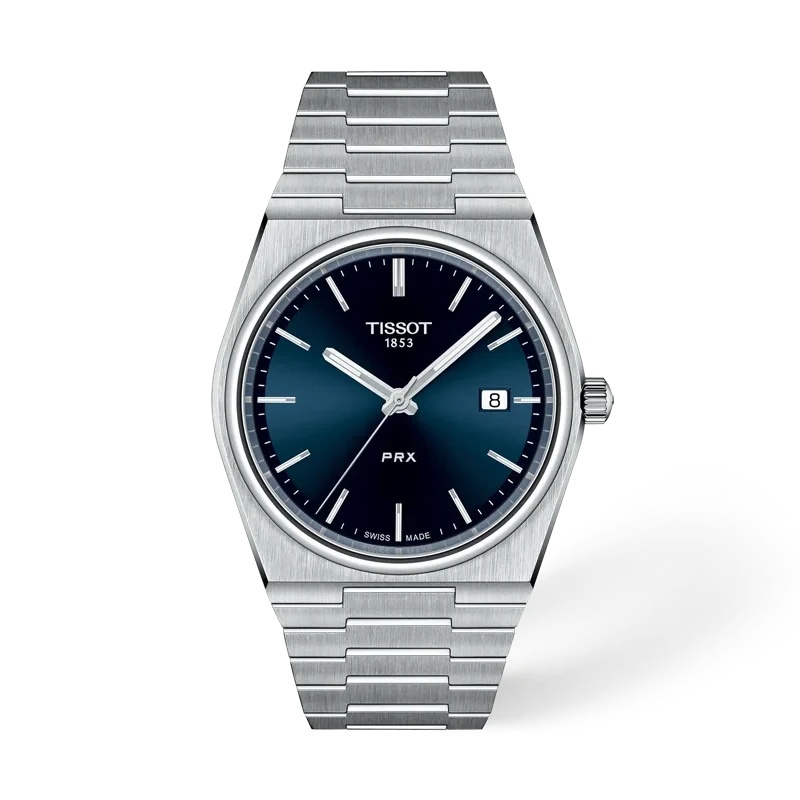 1Quartz bracelet optionTissot PRX Quartz T1374101104100
The quartz PRX suits a buyer who likes the larger case and wants to avoid winding, but the bracelet's full rigid span still needs a fit check.
View at TissotRead our analysis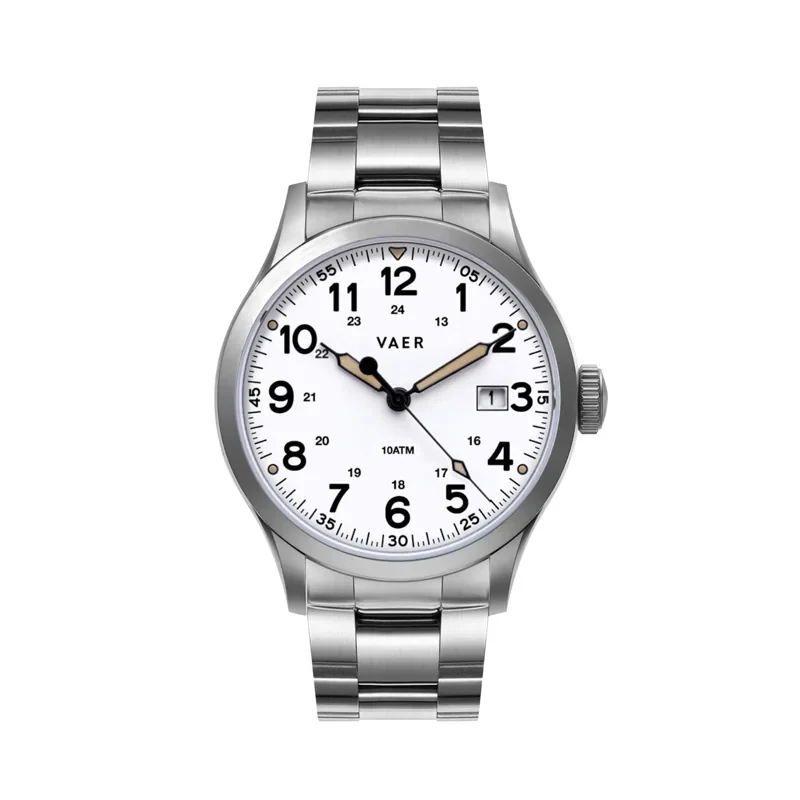 2Quartz field optionVaer S5 Calendar Field S5-FW
Choose the S5 Calendar Field for its quartz routine and date display, but check the 40 mm case and the exact supplied strap pair before ordering.
View at VaerRead our analysis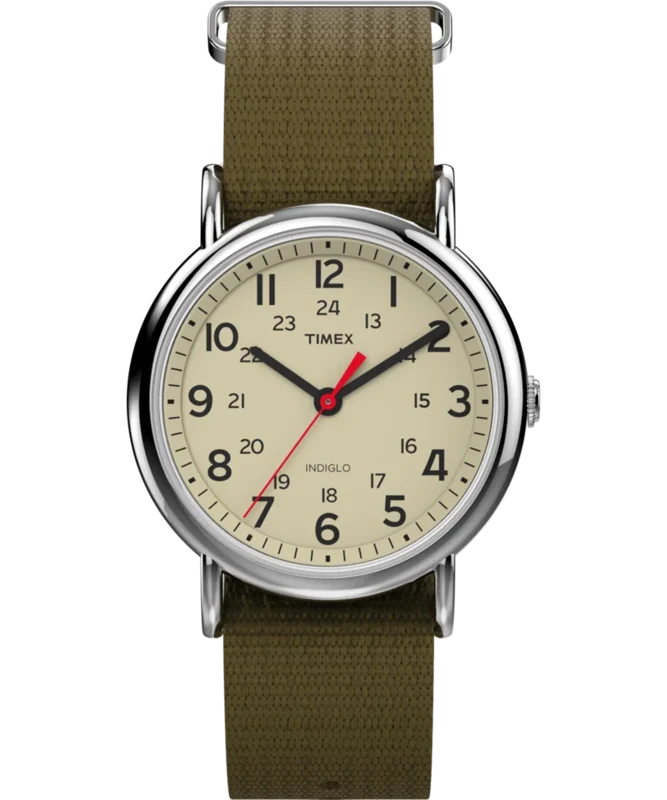 3Fabric-strap analogTimex Weekender T2N651
Choose this Weekender for its fabric strap and Indiglo dial light, but check that its 38 mm case and casual design suit your use.
View at TimexRead our analysis
Last updated 31 October 2026
The best work watches depend on the work you do and the watch wear your workplace allows. For a desk day, useful questions include how the case sits by a cuff, whether you want a date, and which band you prefer. These three quartz references cover steel, a field-style strap pair and a simple fabric-band option. None is recommended as safety equipment or as permission to wear a watch around machinery. Check your employer's rules first.
#1. Tissot PRX quartz T1374101104100: a steel bracelet and date
Tissot PRX Quartz T1374101104100
Our verdict:
Quartz bracelet option
The quartz PRX suits a buyer who likes the larger case and wants to avoid winding, but the bracelet's full rigid span still needs a fit check.
View at TissotKeep in mind: Case width does not establish the bracelet's full reach on your wrist.
The PRX leads this selection for someone who wants a steel-bracelet watch with a date for ordinary desk use. Its quartz movement avoids winding when the watch is left off over a break. Battery service still belongs in the ownership plan. Choose the movement because that routine suits you, rather than assuming a mechanical watch is required for a work setting.
Tissot's US model page gives a 40 mm case width and 10.40 mm thickness. It lists a sapphire crystal and a steel bracelet with a butterfly clasp. The blue dial is part of this exact reference. A different PRX listing can change the case or movement, so keep the full code with the design you chose.
The opening bracelet section has rigid reach beyond the case. Test the whole watch with the clasp fastened before deciding that a 40 mm width is the right fit. Look at how it sits with your forearm resting in your normal desk position. A watch can feel different with the wrist bent than it does in a straight-arm product photo. This guide has not measured pressure or comfort at a desk.
Try your normal sleeve with it as well. The maker's 39.5 mm case-length figure does not establish the full case-and-bracelet span. Thickness alone does not prove that a cuff will pass over it. A practical fitting tells you more about that sleeve than a claim that every slim-looking watch works under every shirt.
Choose the PRX when the bracelet itself appeals to you. If you need a soft band or a specific workplace-approved material, verify that requirement before buying. A quick-release attachment does not make every replacement strap compatible. Read the exact accessory guidance rather than planning around a strap that may not fit.
#2. Vaer S5 Calendar Field S5-FW: a date with a strap pair
Our verdict:
Quartz field option
Choose the S5 Calendar Field for its quartz routine and date display, but check the 40 mm case and the exact supplied strap pair before ordering.
View at VaerKeep in mind: The case reaches 48 mm from lug to lug, and battery service remains part of ownership.
The white-dial S5 Calendar Field is the alternative if you want a field-style hour track and a date. The matched reference is S5-FW-SIL20BLK-NY20KHA. It identifies the white version with black silicone and khaki nylon straps. It is separate from the black Tactical model, even if a catalog groups their features together. Confirm which straps the seller supplies with the exact offer.
Vaer's current model page lists a 40 mm steel case, 9.4 mm thickness and 48 mm lug-to-lug length. A sapphire crystal and quartz date movement are named features. These dimensions give you a starting point for fitting. They do not prove that the longer case span suits your wrist or avoids contact with a desk.
Choose this model for its layout and strap options if those match your day. A nylon band and a silicone band have different feel and care needs, but this page does not claim either prevents skin irritation or suits every workplace. Follow the maker's care instructions and your employer's rules. A supplied strap is an option to assess, not a universal approval.
The stated 10ATM rating describes the case. It does not prove that the watch can cope with the hazards of your job. Field styling is no proof of that either. If your job sets equipment standards, use those standards to assess the exact product before wearing it there.
The main fit trade-off is the 48 mm case length. Try it with the band you intend to use and check where the lugs end. Eventual battery service is another ownership task. The date window and quartz routine are useful reasons to consider this S5; they do not remove the need for a real fitting.
#3. Timex Weekender T2N651: a plain routine on fabric
Our verdict:
Fabric-strap analog
Choose this Weekender for its fabric strap and Indiglo dial light, but check that its 38 mm case and casual design suit your use.
View at TimexKeep in mind: It needs eventual battery service; the fabric strap is a distinct choice from a steel bracelet.
The Weekender is the pick if you want a quartz time display on a fabric strap and do not need a calendar. This exact T2N651 reference has a cream dial and an olive fabric band. It keeps the comparison distinct from the date-equipped PRX and S5. A simpler display can be a preference without being described as better for every reader.
Timex's current US page lists a 38 mm case and quartz power. It also names Indiglo. That is button-operated dial lighting, a different system from relying on charged luminous paint. This selection does not assign a measured brightness score or a runtime to the light. Use the exact instructions for the control.
The smaller quoted width makes this one worth trying if the two 40 mm cases feel too broad. It still does not establish a full wrist fit. Check the band holes, the case ends and how the supplied fabric sits. A loose band can let the watch move around even when the case width seems suitable. The complete fastened watch is the thing to compare.
Choose it if the time display and fabric arrangement meet your needs. It is less suited to someone who specifically wants a date on the wrist or a steel bracelet. Do not buy it expecting those features to appear in another version with the same family name. Match T2N651 rather than relying on Weekender alone.
No noise test was carried out for this guide. If a quiet room makes sound a deciding factor, assess the exact watch in that setting where possible and read the return terms. A movement label by itself does not provide a measured sound result. Keep that question separate from the features confirmed on the maker's page.
How we picked the best work watches
This group addresses daily wear where a watch is allowed. We used current maker pages and matched catalog identities to compare the date display, case shape, power routine and supplied bands. All three use quartz power. The aim is to offer different layouts and materials, rather than three colors of one model.
The PRX leads for a steel bracelet with a date. The Vaer offers a date-equipped field-style alternative on straps. The Weekender is the simpler fabric-band choice. That order follows the stated roles; it is not a measured ranking of toughness or workplace suitability. Work with machinery, food, clinical settings or other controlled environments may have rules that exclude these choices entirely.
Factors to consider when choosing a work watch
Check the workplace rule before the specification sheet
Start by finding out whether watches are permitted for your tasks. If your employer sets a rule about jewelry, bands or equipment, follow that rule. A maker's product description cannot overrule it. A watch that seems fine for a commute may not be allowed during the work itself. Keep those two parts of the day separate when making the decision.
Do not use a water-resistance figure or a field-watch name as a substitute for a required approval. Neither says how a watch behaves around the particular equipment or materials you use. This guide provides no safety certification for these models. Ask the responsible person at work when the requirement is unclear, before buying a watch for that task.
If you will remove the watch for part of a shift, plan where it will be stored. Follow the maker's care guidance and keep it away from conditions the instructions exclude. The choice may then be about a commute and ordinary off-duty wear rather than use throughout the job. That is a valid, narrower brief for an everyday watch.
Decide whether the date is useful
The PRX and Vaer choices have a date display. The Weekender here is the time-only alternative. If you often check the date while writing or reading documents, decide whether having it on the watch is useful to you. Do not treat an extra display as a benefit by default. It also adds a setting task when the calendar needs correction.
Read the exact calendar instructions before using the crown. A date window does not establish that every movement follows the same setting process. If the display seems wrong, check the manual rather than turning the controls at random. Keep the instructions with the watch so the routine is easy to repeat after service or an extended break.
The dial must still be readable to you. A date window in a photograph can look much larger than it does on the wrist. Try to view the watch at a normal reading distance. This selection does not claim that any of these displays meets a particular visual-accessibility need. A personal reading check is part of choosing the exact watch.
Try the position you work in
Fit checks should include more than standing with your arm straight. If you work at a desk, rest your forearm in its usual position and bend your wrist normally. Notice whether the case or clasp touches a surface in a way you dislike. Do not assume a thinner case removes every contact point. The band and clasp sit elsewhere on the wrist.
Use your normal cuff for that check. The PRX's rigid bracelet span, the Vaer's 48 mm lug-to-lug length and the Weekender's fabric arrangement create different shapes. Each needs its own fitting. It is possible to prefer a watch with a larger quoted width because of its whole shape, but no such outcome is promised here.
Read the return and sizing conditions before changing links or bands. Keep the supplied parts while you decide. If a watch only works after a major change you have not verified, reconsider whether it meets the brief as supplied. A simple fitting problem is easier to resolve before alteration than after it.
Make band care part of the choice
The bracelet, silicone and fabric options have different care instructions. Read those instructions rather than assuming that a case rating covers the band. If your work requires a particular cleaning process, check whether the exact watch and band are compatible with it. This guide does not invent a cleaning method or claim that a material is sterile.
Think about whether you want one supplied arrangement or the option of changing straps. The matched Vaer reference identifies a pair; the Weekender here is the olive fabric model. A seller may offer other bundles, so inspect the exact contents before ordering. A bracelet shown on a maker's custom build is not proof that it comes with every offer.
If a band causes discomfort, do not assume a different case specification will answer the issue. Material, fit and individual needs are separate questions. Stop using a watch that is causing a problem and seek appropriate advice for the concern. The recommendation here is a feature comparison, not a promise about skin response.
Plan for breaks and service
If you alternate between a home desk and another workplace, try the watch at both. The height of a desk and the way you sit can change where your wrist rests. Check the clasp as well as the case. A fitting at a shop is useful, but it need not reproduce every position you use through a day.
Keep the first few checks simple. Wear the watch as supplied while you assess the fit under the seller's terms. Note what you want to change before buying parts. If the main problem is the rigid case span, a different band will not shorten the case. If the issue is the band setting, ask about that exact part of the fit.
All three quartz choices avoid the winding routine of an automatic. That can suit a watch left off over a weekend or a longer break. It does not guarantee that the time or date is always correct. Check the display before returning to use, especially after a long rest or a battery change. Battery replacement and other service still need planning.
Ask the maker or a qualified service provider about the correct service process. If water use is part of your plans, ask what checks the watch needs after it is opened. Do not assume a battery change alone proves its current resistance. Condition and service history matter alongside the original specification.
If you prefer a spring-powered movement instead, begin with the automatic-watch guide. That is a different ownership preference, not a requirement for professional dress. Choose a routine you intend to follow rather than one you feel a work watch ought to have.
A practical workday comparison
Write down the display you want, the band you prefer and the workplace restriction that applies. Then try the shortlist against those three points. If a date is essential, the Weekender leaves the list early. If a bracelet is the main aim, the PRX is the direct starting point. If you want the field-style layout and supplied strap pair, inspect the exact Vaer bundle.
Do not add features to make a choice seem more complete. None of these is a communication device, and this comparison does not rely on alerts or app functions. The task is to show time, with the calendar and light features named above where present. Decide whether those are the tasks you want your wristwatch to handle during the day.
For dress-focused choices beyond this desk-day brief, use the dress-watch comparison. It includes a leather-strapped automatic and a smaller bracelet automatic. That wider view may be useful if an outfit and movement preference matter more than the date-equipped quartz choices emphasized here.
Verdict on the best work watches
The best work watches here fit three ordinary daily routines. Start with the quartz PRX for a steel bracelet and date if its full span fits. The Vaer S5 Calendar Field offers a date on a field-style dial with the matched strap pair. Choose the Weekender for a simpler fabric-band time display with Indiglo.
Check workplace rules first, then try the complete watch in the position and sleeve you use. Keep the exact reference and supplied band tied to the offer. A clear daily-use brief gives you a better choice than an unsupported promise of all-purpose toughness.